In a hot, dry country like the United Arab Emirates, every drop of water counts. Gallagher offers a technological water monitoring solution to ensure efficient water usage is maximised.
United Arab Emirates (UAE)
The United Arab Emirates is situated in the eastern part of the Arabian Peninsula. It borders on the south eastern coast of the Persian Gulf and the north western coast of the Gulf of Oman.
The country covers a total area of about 83 600 square kilometres, of which about 5,5% was used for agriculture in 2001. The number of farms has increased from about 4 000 in the seventies to some 38 000 at present.
Hot and arid
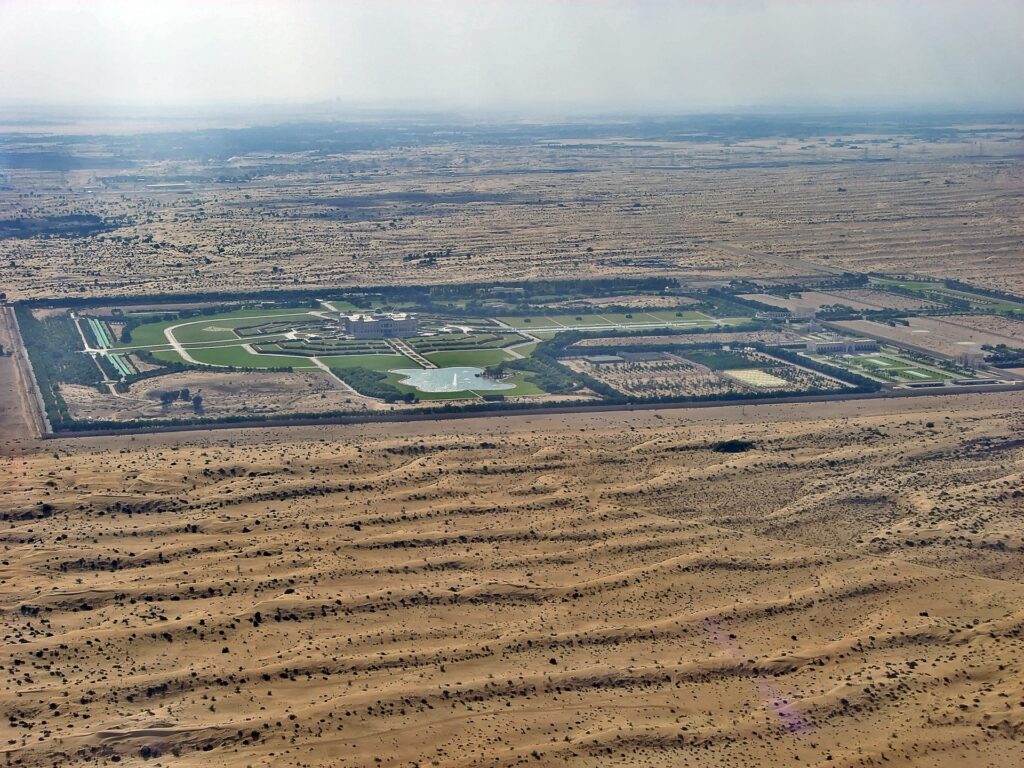
The country is mostly desert, and agriculture traditionally centred around lush green oasis. Modern technology has made the desert bloom, and today the country produces about 20% of its own food.
Rainfall is minimal, with an average of between 100 mm and 150 mm annually. There are no perennial streams, nor any regularly occurring bodies of surface water. The little precipitation from the Hajar Mountains form seasonal wet riverbeds (wadis) that feed the water table.
The climate is hot and humid along the coast, but hot and arid in the interior. Temperatures range between 18 °C in January and 33 °C in July, but with climate change, extreme temperatures as high as 50 °C have been recorded in the summer. The shamal (north wind) that rages from midwinter to early summer whips up relentless sand and dust storms.

(Source: Pixabay)
Natural vegetation is scarce and mostly consist of low shrubs that offer forage to nomadic herds. Large animals include Arabian oryx and Arabian and Persian gazelles, smaller mammals like the Cape hare, lesser jerboa, and gerbil, as well as snakes and lizards. Predators include caracal, sand cat, desert fox and red fox. The Gulf waters are home to a variety of fish, including mackerel and tuna, as well as sharks and occasionally whales.
Water shortage
The drive to increase the arable area since the seventies resulted in the depletion of underground aquifers, a drop in water tables and an increase in soil and water salinity. Rising temperatures exacerbate these conditions.
Agriculture makes use of wells and pumps to fill tanks to provide water for modern irrigation systems that replaced traditional flood irrigation. Desalination plants that convert sea water into fresh water contributes more than 80% of daily water requirements, including household use and agriculture.
Agricultural activities
Dates remain a major crop, while the country is almost self-sufficient in vegetable and fruit production. Yields have been increased by precision farming that uses data science and agricultural engineering. High-tech greenhouses including domes and tunnels, and vertical
farms are reducing the need for water.
Food production meets about 20% of the total demand. In total, about 156 000 tonnes of vegetables, including leafy greens, tomatoes, eggfruit, peppers, and cucumbers, are produced annually. Fruit production yields 200 000 tonnes, while field crops, including protein-enriched grains and feed, yield about 500 tonnes.

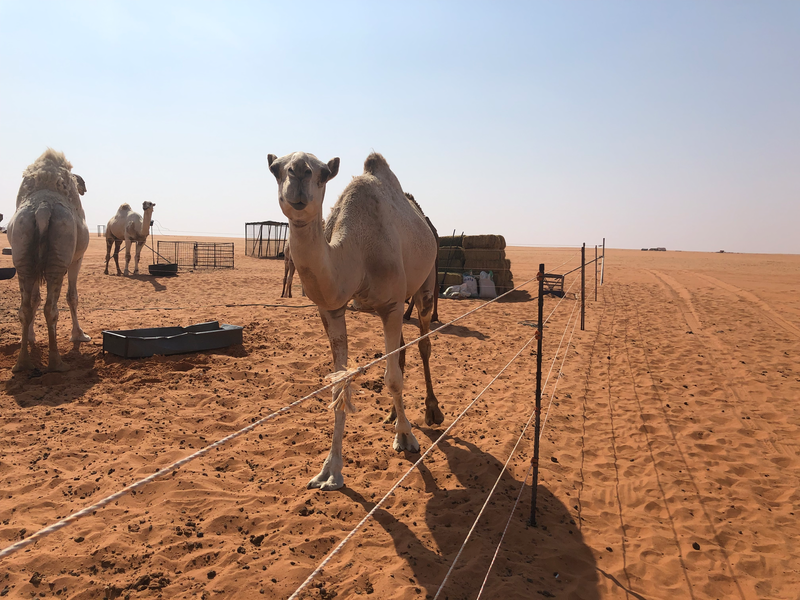
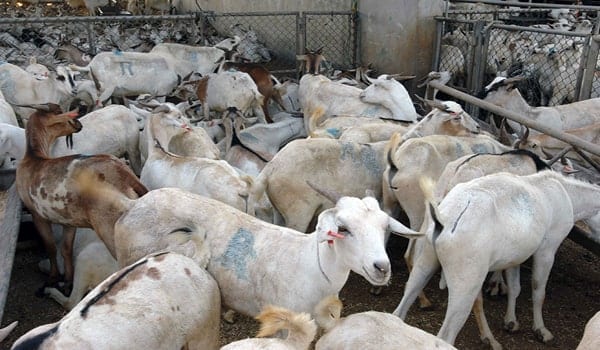
Livestock farming includes goats, sheep, camels, and cattle, which is an essential source of food production. Many of these are kept under controlled conditions and prepared for the market at huge, shaded feedlots. Gene editing, bio-engineering and smart tech to monitor cattle more closely are being used to increase meat production to keep up with consumer demand and to reduce greenhouse gas emissions.
The country produces enough eggs, poultry, fish, and dairy products to meet its own needs.

Water monitoring solutions from Gallagher
Common issues with water management anywhere include monitoring the level and consumption of remote water storage.
Gallagher’s wireless water monitoring system in the form of a cell phone application (app) can solve this problem. The system monitors the water level of up to nine tanks, the control of up to two pumps, and sends notifications of levels and alerts when water levels are too low.
The system consists of a:
- water mobile app that provides a view of your water information anywhere, anytime;
- water level sensor that measures tank levels to monitor water availability;
- data transmitter that sends data from the water level sensors to the receiver;
- touch screen receiver that receives the real time water level data;
- pump controller that ensures tank levels are maintained; and
- water flow indicator that shows water lines to view water flow and find leaks.
Benefits of Gallagher water monitoring system
- By monitoring tank levels, you always know how much water has been used and how much is still available.
- An early warning system sends an alert when tank levels drop or when water uses change, which may indicate a leak.
- The app also allows remote control of nine tanks and two pumps.
- The app provides long-range communication with a connectivity range of up to 10 km, as long as there is an uninterrupted line of sight between the data transmitters at the tanks, the pumps, and the touch screen receiver.
- Antennas are available if the range needs to be extended.
- No cellular or internet coverage is required at the site of your tanks or pumps, as the data is transmitted via the line of sight back to the touch screen receiver.
- Wi-Fi connectivity at the location of the receiver enables data to be synchronised to the Gallagher water mobile app.
- The app is user-friendly and easy to read and navigate through the screens.
By Tisha Steyn